The following statements by the National Alliance of People’s Movements and the Odisha based Ganatantrik Adhikar Surakhya Sangathan are among many expressions of outrage at state attacks using the anti-terror Unlawful Activities (Prevention) Act (UAPA) on Adivasis seeking to protect the Niyamgiri hills from bauxite mining. Find out more here: https://www.counterview.net/2023/08/state-attacking-activists-to-break.html ; https://pudr.org/free-niyamgiri-stop-arrests-illegal-detentions-and-attacks-nss-and-people-kashipur ; https://countercurrents.org/2023/08/withdraw-uapa-cases-against-leaders-activists-and-supporters-of-the-movement-led-by-niyamgiri-surakhya-samiti/
-
Solidarity with Adivasi villagers resisting Vedanta’s attempted takeover of their sacred mountains to mine bauxite.
The following articles report on this in detail:
-
Press Note
Over 85 international organisations and individual campaigners, activists and academics including two Labour MPs and a former Labour MEP have released a statement condemning the Indian state’s continued drone bomb attacks in Bijapur district in Chhattisgarh, the most recent on 7 April 2023. The repeated use of aerial bombardment on civilian populations suggests a new dimension to the state terror being inflicted on the Adivasi population of Bastar for years. While no casualties have been reported this may indicate that the purpose of the attack was to create terror among the Adivasi people and make them abandon their villages, thus making way for mining corporations to move in the area.
The third attack also happened in the same district earlier this year on 11 January 2023. A Fact-Finding Team of the Coordination of Democratic Rights Organisation (CDRO) was prevented by the administration from visiting the sites of the attacks, but could finally visit the villages in March 2023 and obtained evidence and testimonies of the aerial bombardment. The solution to reckless development policies that favour mining corporations surely does not lie in a government inflicting terror on the population it purports to govern. It certainly will not be found in the bombing campaigns that are currently being carried out against the people living in the forests of Chhattisgarh. The answer must be found in an understanding that puts the needs of the indigenous people before the profits of mining enterprises.
It is not too late to sign the letter. You can add your name and/or organisation here: https://forms.gle/WsHwB3BrEV8af9Sp6
The full statement and list of signatories is available here:
Fourth Drone Bomb Attack on Indigenous People in Bastar, Chhattisgarh
Stop This State Terror Now!
Indigenous (Adivasi) people in Bijapur district of Bastar, in the Indian state of Chhattisgarh, have been traumatised by yet another aerial bomb attack from the security forces which have been using drones to carry out these operations. Although the Indian Air Force is not officially deployed for combat in Chhattisgarh, the repeated use of aerial bombardment on civilian populations suggests a new dimension to the state terror being inflicted on the Adivasi population of Bastar for years. This particular bombardment was carried on 7 April 2023 on four villages that lie in the Morkemetta hills.
Immediately following the bombing, which caused panic amongst the people, the government forces deployed three helicopters to discharge heavy machine gun fire on the villagers going about their routine activities. Fortunately, no casualties have been reported, however, one person is known to have sustained several injuries. The fact that there were no casualties may indicate that the purpose of the attack was to create terror among the Adivasi people and make them abandon their villages, thus making way for mining corporations to move in the area. As previously, the police has claimed that the allegations are false and an attempt is made to “mislead” the “native population.
“We had gone out early morning to gather mahua when suddenly from the top a drone came and showered bombs over us. We didn’t understand what was happening …”
“What does the sarkar want from us sir, … We are the people who live in the forests, … why is the sarkar doing all this to us? What will the sarkar do after driving us all away from here? We are now scared of going into the jungle. If drones attacks are going to happen from the sky, who will want to go into the forest? One is feeling scared of even living here in the village …”
[Translated testimonies from villagers, source confidential]
This latest attack on the Adivasis is part of an ongoing operation called Operation SAMADHAN-Prahar, a genocidal military policy to break the people’s democratic resistance against corporate looting. This operation, started in 2017, is follow-up of its predecessor, the infamous Operation Green Hunt carried out by the police and central paramilitary forces, coupled with Salwa Judum, a government funded vigilante mercenary organisation set up against the Adivasi people. The Salwa Judum was discontinued after the Supreme Court of India declared it unlawful, but paramilitary operations against the Adivasi population have continued in different forms, including these latest cases of aerial bombing.
The attack on 7 April 2023 is the fourth such aerial attack in past three years. The one prior to this occurred on 11 January 2023 in the same district. A Fact-Finding Team put together by Coordination of Democratic Rights Organisation (CDRO) was prevented by the administration from visiting the sites of the attacks later that month, but could finally visit the villages in March 2023 and obtained evidence and testimonies of the aerial bombardment. As noted above, military operations have been going on since over a decade with the specific aim of removing the Adivasi people from the jungles of central India, under the façade of eliminating the CPI (Maoist) guerrillas, otherwise known as “Naxals”, whom the Indian government terms as left-wing extremists.
What underlies this conflict with the Maoist insurgents in the forests of central India? Adivasis live in forests which exist over lands that often contain precious minerals underneath the earth. The corporate giants want to extract those minerals for fat profits. Unfortunately, the Adivasi are in the way. Rather than being bulldozed off their land, losing lives and livelihoods, which has all too often happened in the past, the Adivasis have learned to resist and defend their ancestral land. The conflict is between Adivasis and state-corporate nexus, with the security forces backing the entry of the mining corporations into these areas. This resistance has resulted in hundreds of Adivasi being killed in fake encounters, thousands ending up in prison as undertrials, and many instances of sexual violence against women.
Social activists who have been speaking out against this injustice have also ended up in prisons. Falsely accused and convicted Professor G N Saibaba, Pandu Narote, Mahesh Tikri, Hem Mishra, Prashant Rahi and Vijay Tikri are serving life imprisonment in Nagpur prison since March 2017. Pandu Narote has since died in prison as a result of the jail authority’s negligence. G N Saibaba devoted his life to defending the rights of the Adivasi to their land. Then there are the well known sixteen democratic rights activists falsely implicated in what has come to be known as the Bhima Koregaon case. These sixteen were locked in prison between 2018 and 2020 on the basis of an essentially fabricated case prepared by the notorious National Investigative Agency against them under the Unlawful Activities Prevention Act. Since then, one of them, Father Stan Swamy, an ardent proponent of Adivasi land rights, died in prison due to willful medical negligence on 5 July 2021, and only three have managed to secure bail after huge legal battles.
For decades, successive Prime Ministers and Home Ministers have been driving the operations to displace the Adivasis from their lands and livelihoods under the garb of eliminating the Maoists. They have consistently failed because the Adivasis understand their intentions and continue to resist every Indian government’s policy to turn them into internally displaced migrants in their own country. The solution to these reckless policies in favour of the mining corporations surely does not lie in the government inflicting terror on the population it purports to govern. It certainly will not be found in the bombing campaigns that are currently being carried out against the people living in the forests of Chhattisgarh. The answer must be found in an understanding that puts the needs of the indigenous people before the profits of mining enterprises.
International democratic organisations demand:
- Immediate halt to the aerial bombardment of Adivasi people in India
- Immediate halt to Operation SAMADHAN-Prahar and other such operations
- Immediate cessation of all mining projects in the Adivasi heartlands
- Promptly start open negotiations with the Adivasi people recognizing their right to life, land and livelihoods.
- Immediate release of all prisoners fighting for the rights of Adivasi people
Clive Lewis MP
Nadia Whittome MP
Julie Ward (former Labour MEP)
Matt Wrack, Fire Brigades Union General Secretary
Ben Selby, Fire Brigades Union Assistant General Secretary
John Moloney Assistant General Secretary (PCS)
Anielka Borowczyk / Razem (“Together” Polish Party)
London Mining Network
Indian Workers Association (GB)
Movement for Revolutionary Reparations
South Asia Solidarity Group
India Labour Solidarity
Jordan Faour
Haroon Kasim, Co-Founder, The Humanism Project
Amrit Wilson, South Asia Solidarity Group
Isobel Tarr, Coal Action Network
Virasam, Revolutionary Writers Association
Helena Paul
Miles Litvinoff
Dr Andy Higginbottom
Anna Epstein
Indian Scheduled Caste Welfare Association UK
Akash Bhattacharya, CPI-ML Liberation
Beth Bhargava, University of Sheffield
Sarbjit Johal
Praveen Kolluguri, India Labour Solidarity
Sruti Bala
International Solidarity for Academic Freedom in India (InSAF India)
Shanmugam Velu, IWA(GB)
Nicola James
Rajeev Singha
Nicholas Hildyard, The Corner House
UKSCN London
Scientists for Extinction Rebellion
AJ De Vera
Ayaan Mohammed
Demilitarise Lancaster
Glasgow Against Arms and Fossil
Vicky Blake UCU Immediate Past President (personal capacity)
Rhian Elinor Keyse (UCU, personal capacity)
India Solidarity Germany
India Justice Project (Germany)
Morgan Neilson
Anti Caste Discrimination Alliance (ACDA)
Rhianna Humphreys
US Free Saibaba Coalition
Gideon Flemming
Cathy Nugent, Workers’ Liberty
Terry Blackman, London Mining Network
Stichting The London Story
Lotika Singha
Sacha Ismail
India Matters UK
India Civil Watch International
Ashok Danavath / Independent Researcher
SOLIFONDS
Anna-Marie Dolan
Charles Deacon
Chandra Ghosh
Norman Hindson
Tipping Point UK
Annapurna Menon/University of Sheffield
Mike Rowley
Andrea Gilbert Unite the union
Naresh Kaushal
Dr. Mihika Chatterjee, Lecturer, University of Bath
Margaret Owen O.B.E. Widows for Peace through Democracy ( WPD).
Rebecca Allen
Patrick Yarker UCU
Saranya Paidimukkala; City, University of London
Stephen McCluskie
Cllr Alex Armitage, Scottish Green Party
Kas Witana, Penistone and Stocksbridge CLP Political Education Officer
Meena Dhanda
Yogi Rajan
Chan Ying
The Rights Collective
Laura Schwartz
A.P. Civil Liberties Committee (Apclc)
Sol Gamsu, Branch President Durham University University and Colleges Union
Namaa Al-Mahdi
Friends of the Filipino People in Struggle
Chanchal Chakraborty
Do remember that it is not too late to add your name and/or organisation here. https://forms.gle/WsHwB3BrEV8af9Sp6
-
As people will be aware, there is a crisis in India; not just the recent Covid-19 surge but the human rights violations by the current government for the last five years or so including the revoking of Article 370 and atrocities in Kashmir, the Citizens Amendment Act (CAA), the Farm Bill and indiscriminate arrests under the Unlawful Activities Prevention Act (UAPA). Thousands of people have been arrested under the UAPA, and are now at risk of contracting Covid-19 in crowded prisons.
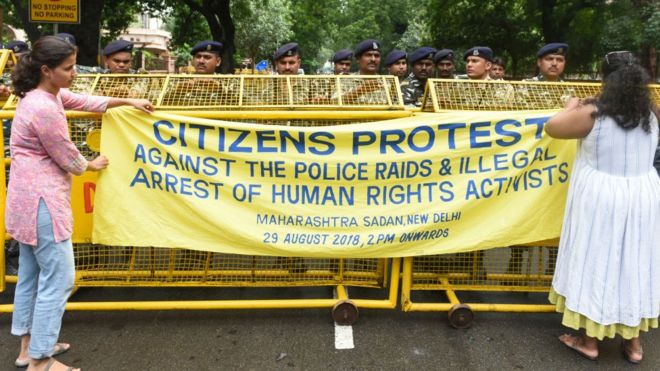
June is particularly significant because it was on the 6 June 2018 that academics and human rights defenders, initially six which later increased to sixteen, were arrested on false charges of communal violence (known as the Bhima Koregaon case) and/or plotting to kill the PM Modi. There is evidence pointing to that fact that these intellectuals have been falsely arrested. This includes the the hacking of the computers of some of the accused and the planting of fake ‘letters’. They have now been in prison for three years. Several of the accused have worked with Adivasi communities defending their rights to their land and resisting large mining projects in particular.
How do we build up international solidarity with people in India?
Here is an informative leaflet to with a few suggestions. Do please feel free to circulate it.
-
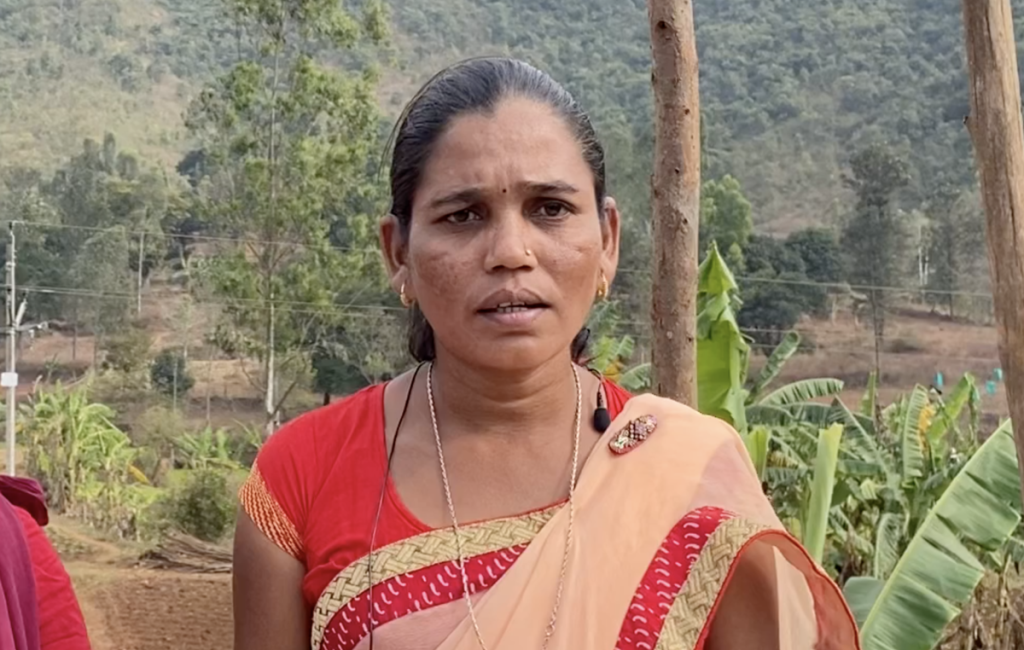
On 9th of March Chhattisgarh police arrested Hidme Markam, Indigenous human rights and environmental defender while she was at an International Women’s Day event where many had gathered to commemorate Adivasi (Indigenous) women who have lost their lives as a consequence of violent physical and sexual assault by police and security forces.
IndiaMatters UK urges you to write to the Chief Minister of Chhattisgarh (cgpccryp.2013@gmail.com ) requesting Hidme Markam’s immediate release and an end to the persecution of Adivasi women and their communities. You can adapt the sample letter below if you wish.
Hidme Markam Background
The police allege that Hidme Markam is a Maoist, but many believe the charges against her to be false. Accusing someone of belonging to a banned organisation is a tactic commonly used by the Indian state to silence dissent including against critics of large development projects which displace people in contravention of their legal and constitutional rights and cause massive and irreversible environmental destruction. It is likely that Hidme Markam’s arrest is linked to her peaceful resistance to mining at Nandaraj hill where the controversial company Adani operates. As convenor of the Jail Bandi Rihai Committee (Committee for Release of Prisoners), she has been vocal in the demand for the release of the thousands of innocent Adivasis accused in false cases and incarcerated in over-crowded jails. Four recent reports (see below)* describe India’s deeply disturbing descent into authoritarianism. These attacks on large numbers of Adivasi and other villagers is a yet another troubling aspect of this and local people are desperate for the world to hear their voices. They are opposed to mining because they are dependent on the land for their livelihoods, including food sovereignty and security, and understand that non-renewable resource extraction “leaves barren toxic void spaces destroying the prior places and lived environments, causes extreme inequalities and is non-developmental” Dr Markus Kroeger, author Iron Will: Global Extractivism and Mining Resistance in Brazil and India.
* a. The annual report by the United States Commission on International Religious Freedom (USCIRF) places India alongside Pakistan, China and North Korea. https://www.bbc.co.uk/news/world-asia-india-52467564
b. Earlier this month, in its annual report on global political rights and liberties, US-based non-profit Freedom House downgraded India from a free democracy to a “partially free democracy”.
c. Last week, Sweden-based V-Dem Institute was harsher in its latest report on democracy. It said India had become an “electoral autocracy”.
d. And last month, India, described as a “flawed democracy”, slipped two places to 53rd position in the latest Democracy Index published by The Economist Intelligence Unit. https://www.bbc.co.uk/news/world-asia-india-56393944
-
In this issue of the IndiaMatters UK newsletter
Unlawful Arrests – Why? ……………………………. 1
On 28 August 2018, five well-known lawyers, journalists and human rights defenders in India were arrested under anti-terror laws. Prominent citizens in India have protested including renowned historian Ramachandra Guha who described the arrests as a ‘witch-hunt’ and ‘illegal misuse of police and state power‘ with ‘utterly fabricated’ charges. UN human rights experts have expressed concerns saying that the terrorism charges are a pretext to silence human rights defenders. A similar wave of arrests of academics, lawyers and activists also took place in June this year…
About IMUK ……………………………. 2
Sudha Bhardwaj: Is she a terroist, a plotter to kill Modi? …………………………….. 3
We revisit Sudha Bhardwaj’s activities for the past 30 years and see if she fits the description of a terrorist ‘urban Maoist’ elaborated by Mr Modi himself…
Bhima Koregaon and Urban Maoists in India …… 4
The entire exercise is to silence dissent, stop people from helping the downtrodden and marginalised people across the Nation and to instill fear in minds of people..
Incredible India …………………………….. 6
In Chhattisgarh and adjoining states, hills and forests have been destroyed to extract coal, iron, bauxite and other minerals; indigenous populations living there have been forcibly displaced. They say, ‘we will fight to save our rivers, forests and lands’…
Protests in India & abroad ……………………………… 7
A selection of photos and brief reports from protests in solidarity with the arrested human rights defenders from around the world…
To read more download the newsletter here:
And just a couple more updates:
Sedition Charges
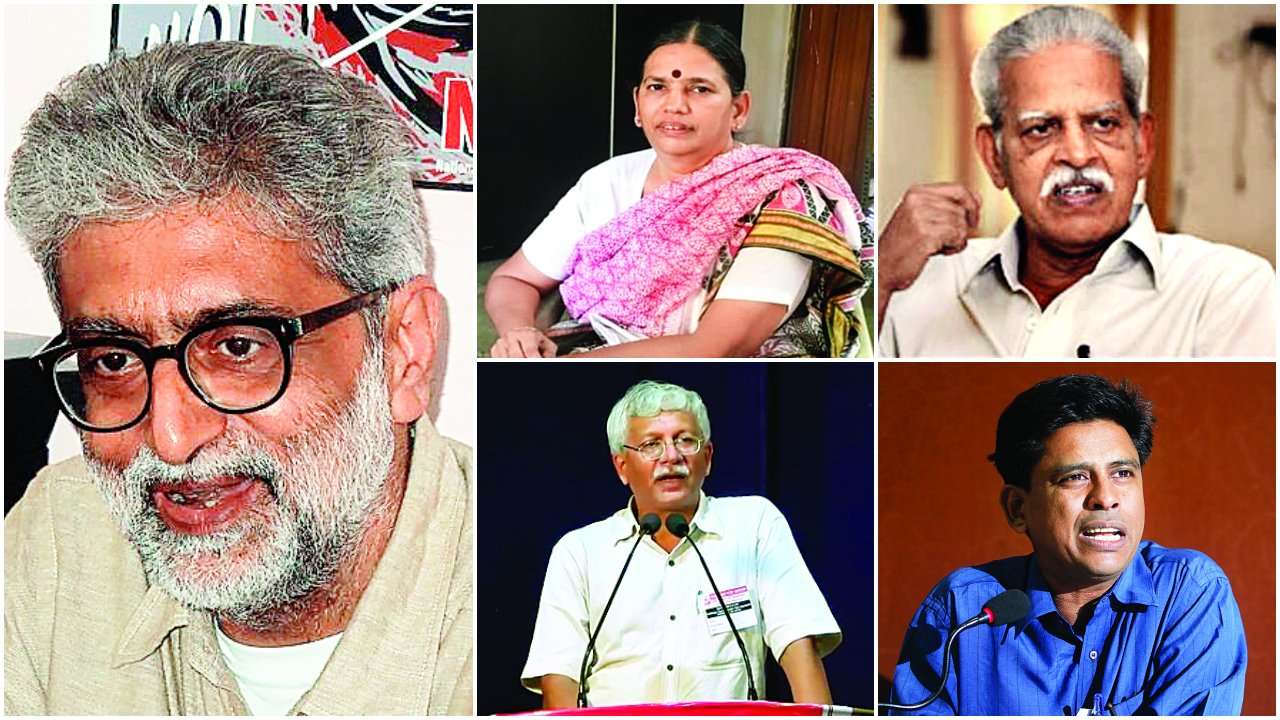
Activists (Clockwise from left): Gautam Navlakha, Sudha Bharadwaj, Varavara Rao, Arun Ferriera and Vernon Gonsalves Months after booking them for their alleged links with Maoists, the Pune police have pressed sedition charges against Varavara Rao, Arun Ferreira, Sudha Bharadwaj, Vernon Gonsalves, and Gautam Navlakha, saying their activities posed danger to the unity of the country.
Indian state election results – the semifinals
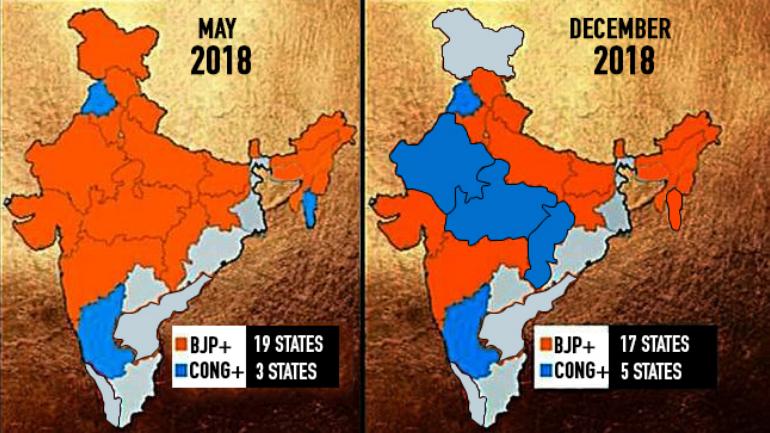
With the Bharatiya Janata Party (BJP) losing power in three Hindi-heartland states–Madhya Pradesh (MP), Rajasthan and Chhattisgarh–the population under BJP rule has dropped by 254 million, from nearly 888 million (71% of India’s population) in 2017 to nearly 634 million (51% of the population) in December 2018. Significant advances for congress.
What, if any, changes for the ongoing human rights situation does this signal and are there reasons to be optimistic?
-
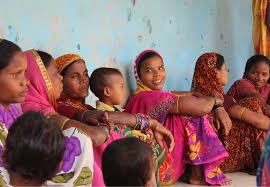
Women of Kosampali village in a meeting. Photo: Aruna Chandrasekhar The Ministry of Environment, Forests and Climate Change has now made it mandatory for all new Thermal Power Plants in the India to comply with “Human Health and Environment” criteria as part of the mandatory clearance procedures.
Through an Office Memorandum issued on 19th November 2018, the MoEFCC mandates that a baseline health status within the study area be conducted and a report prepared along with a bi-Annual check up of all workers in the company. This is a big first step as EIA’s in India were silent on community health and occupational health and safety.
“It’s a welcome first step. Its been a long-standing demand of various communities that health be considered as an aspect of environmental clearances,” said Shweta Narayan, the coordinator at Health Energy Initiative but she adds that
“…the government shouldn’t see this as the last step… They still need to bring in a comprehensive health impact assessment along with an environmental impact assessment. While a baseline study is important, this is just the beginning. We now have higher expectations from the ministry.”
Two significant pieces of research into the health impacts of burning and mining coal informed the MOEFFs decision:
1. The Health Energy Initiative`s report:
2. Report done by medical and environmental experts on behalf of the People First Collective India:
-
A great deal has happened in India since January 2018. This extract from an article in scroll.in gives a brief overview of events. To read the full article just click on the link at the end.
- On New Year’s day 2018, caste violence broke out in Bhima Koregaon village, 30 km from Pune, during a Dalit commemoration event. This event was preceded by a meeting in the city that brought together Ambedkarite organisations and Left activists.
- Some have claimed that this nascent yet politically-potent combination held a threat to the ruling Bharatiya Janata Party, which prompted its allied Hindutva groups to incite violence at Bhima Koregaon and cause a disruption. Others, however, blame the violence on allegedly incendiary speeches by activists at the meeting.
- The competing narratives resulted in a series of police cases. While one case was filed against two Hindutva leaders who opposed the meeting, cases were also filed against activists who organised it, as well as those who spoke on stage.
- The case against the Hindutva leaders resulted in one getting arrested briefly; the other has not even been questioned. Over time, the Pune police’s efforts have come to centre on a complaint that alleged the meeting was organised by Maoists to “mislead the Dalit community”.
- In pursuit of this case, the police has conducted three rounds of raids across six cities, arresting 10 activists and lawyers who work on Dalit and Adivasi rights. The investigation has been marked by criticism of political bias, but also procedural lapses: search warrants were either not presented during the raids, or they were not translated from Marathi. The police took along witnesses from Pune which is illegal. The arrested activists were produced in court without their lawyers being given proper notice.
- Letters purportedly recovered from the activists have been read out to the media, but have not been submitted in court. Experts say the letters stretch credibility.
-
An excellent overview of current conditions in India published in The Wire.
“If steps are not taken now failure will set in.
These failing conditions have not appeared suddenly like some fever. They have been creeping up on us for decades. Successive governments have covered them up and denied they exist. Each of these conditions – (1) our shredded social cohesion; (2) the uncertainty in the parameters of economic development; (3) a deliberate abrogation of constitutional responsibilities; (4) the cover ups by pushing unreliable macro data into the public domain; and (5) the deteriorating security arrangements in which we live – forms narratives within the epic of our looming crisis.” Read the whole article here:
https://thewire.in/217799/india-fragile-state-social-cohesion-executive-judiciary-security/
-
IAPL STATEMENT ON ISSUES RAISED BY FOUR SENIOR SC JUDGES ON 12.1.2018
12th January 2018
The Indian Association of People’s Lawyers applauds the courageous step taken by the four senior-most judges of the Supreme Court in placing, before “we, the people” as the ultimate authority, the impasse that has been created by the refusal of the Chief Justice of India to respond to their legitimate and responsible concerns over his recent administrative actions. In their letter written to the CJI two months ago and made public today, they have raised in particular the allocation of various important and sensitive cases in a manner that is violative of court traditions, norms and decorum to junior or handpicked judges thus raising apprehensions regarding the integrity of the Supreme Court. They have stated that Democracy is in danger if the Judiciary is not independent.
In doing so, they have affirmed what several courageous senior lawyers – Dushyant Dave, Prashant Bhushan, Indira Jaising, Kamini Jaiswal, Rajeev Dhawan etc. have been facing and fighting in sensitive matters such as the “Aadhar” case, the case for instituting an SIT into Judge Loya’s death in suspicious circumstances, the CJAR matter, the Ram Janmabhoomi- Babri Masjid matter and many others.
This is the time when lawyers all over the country must rise to the occasion to publicly debate the issues of judicial appointments, judicial accountability, and judicial integrity in our Supreme Court and High Courts. The concern is not only regarding pendency, delay and corruption; but also the erosion in Constitutional values of social justice and nondiscrimination, freedom of speech and association, secularism and a socialist pattern of economy, while adjudicating cases. As “officers of the court” let us play our role in breathing life into our Constitution.
Signed,
Adv. Surendra Gadling, General Secretary, IAPL
Adv. Sudha Bharadwaj, Vice-President, IAPL
More information:
 India Matters